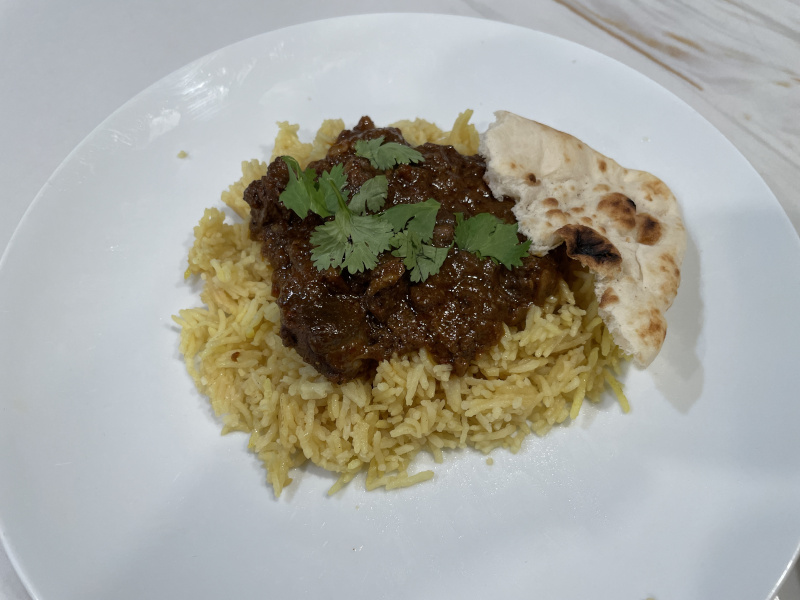
Lamb Vindaloo
My son is the drummer of the Philly Metalcore band “In Jest”. Follow them on Instagram – https://www.instagram.com/injest215/
Apparently, the band did not like the parking situation nor the price of food in Providence RI, the running joke was a $40 lamb vindaloo.
My new mission that I chose to accept; to serve lamb vindaloo the next time the band was at our house.
Not having had a memorable vindaloo in the past, more about that later, I found the history and a few possible good renditions on the internet.
The dish is simple to make. It takes time, but not effort time, just time, the meat must marinate over night and it must be cooked tender with a thickened gravy, time.
I will make a video in the future, but for now, this is how I did it, and it was really good, probably the best I’ve ever had.
I’m also discovering that this is only one of several Portuguese influences in India, who knew.
Vindaloo originated from a Portuguese sailor dish called carne de vinha d’alhos (meat in wine and garlic) brought to Goa in the 15th and 16th centuries.
You also guessed it, I’ll be on the lookout for a Portuguese restaurant to try carne vinha d’alhos, and then I’ll make it at home.
Let’s dig in to the recipe and then I’ll rant.
Equipment:
- Blender
- Dutch oven with lid, or stock pot
Ingredients:
- 2 LBS Lamb (leg or shoulder) – I used leg in stew sized cubes
- 1 medium to large yellow onion about 425 grams or about 15 oz
- 2 oz olive oil
- ½ tsp turmeric
- 1 tsp Kashmiri chili powder
- 2 cups of water.
- 2 tsp sugar
- Salt and pepper to taste (about 2 tsp of salt)
Marinade:
- 8 – 10 whole Kashmiri chilies seeded and stemmed
- 4 green cardamom pods
- 1 tsp cloves
- 2 inch cinnamon stick
- 1 tsp coriander seeds
- 1 tsp cumin seeds
- 1 tsp mustard seeds
- 1/2 ground fenugreek seeds
- 1 tsp black pepper
- 8 cloves Of garlic
- 2″ piece of ginger
- 1/3 cup of malt vinegar (if you want a brighter red vindaloo, then use white vinegar)
- 1/3 cup water
- ½ tsp tamarind concentrate (if you want a brighter red vindaloo, omit this)
Put all of the seeds and whole spices in a cold pan and gently warm it to toast them briefly, about 2 to 3 minutes. Do not burn the seeds and whole spices.
Remove the seeds and spices from the pan a let them cool
Put all of the dry ingredients, (seeds whole spices, chilies) in a blender and blend until the whole mix is a powder.
Add the liquid (vinegar, water, tamarind concentrate), garlic, and ginger and puree until it is a nice homogenous paste.
I’m convinced that you can get very close results by just using ground spices instead of whole, you just need to adjust the measurements. Actually, for consistency purposes, ground spices always from the same source might be better. It will always be the same. As cooks we rely on consistency. We never want a dish to be a one hit wonder.
Cut the lamb into stew sized chunks. I like about an inch. You are going to cook this for 2 to 2 ½ hours so you don’t want the lamb to disintegrate. Be sure to remove excess fat. You can leave a bit of fat for flavor, but trim the excess.
Mix the lamb chunks with the marinade and refrigerate overnight.
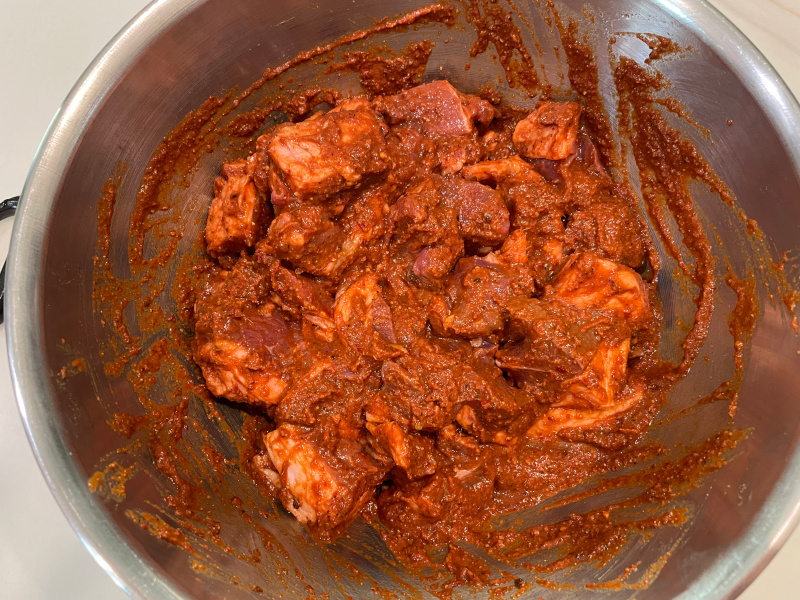
Start making the vindaloo 4 hours before you want to serve.
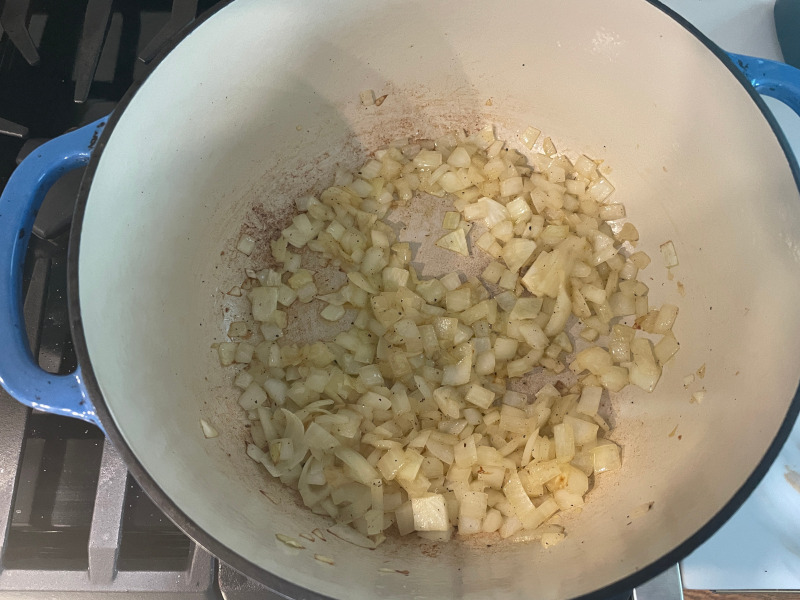
Cut the onion into a medium to fine dice.
Warm the Dutch oven over medium heat and add the olive oil.
Add the onions and a sprinkle of salt and pepper
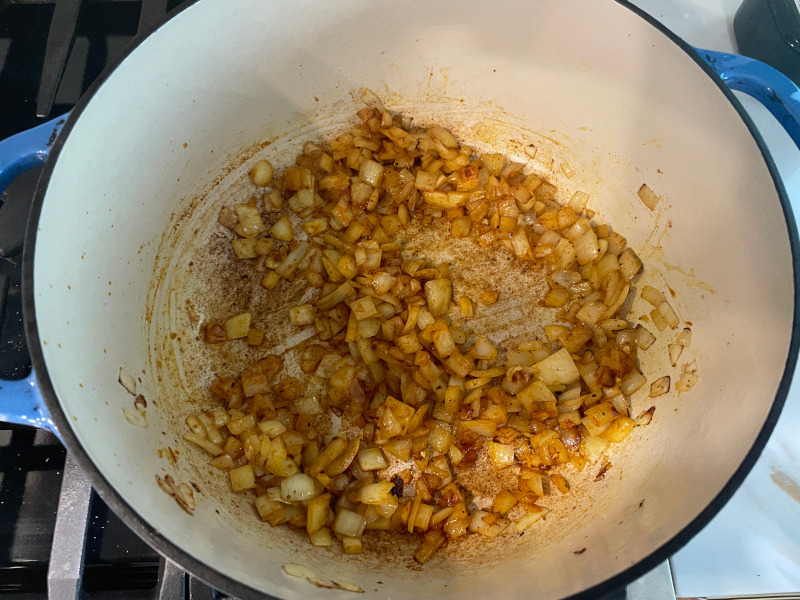
sauté the onions until they start to get color
Add the turmeric and the Kashmiri chili and sauté about a minute longer until they blend and release aromas.
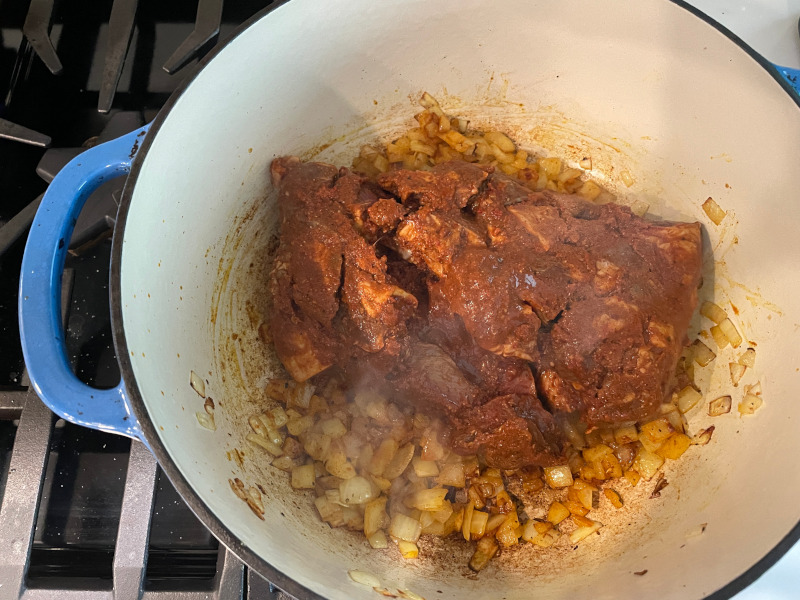
Add the marinated lamb with all of the marinade, and stir it up.
Sauté the lamb for a few minutes occasionally stirring.
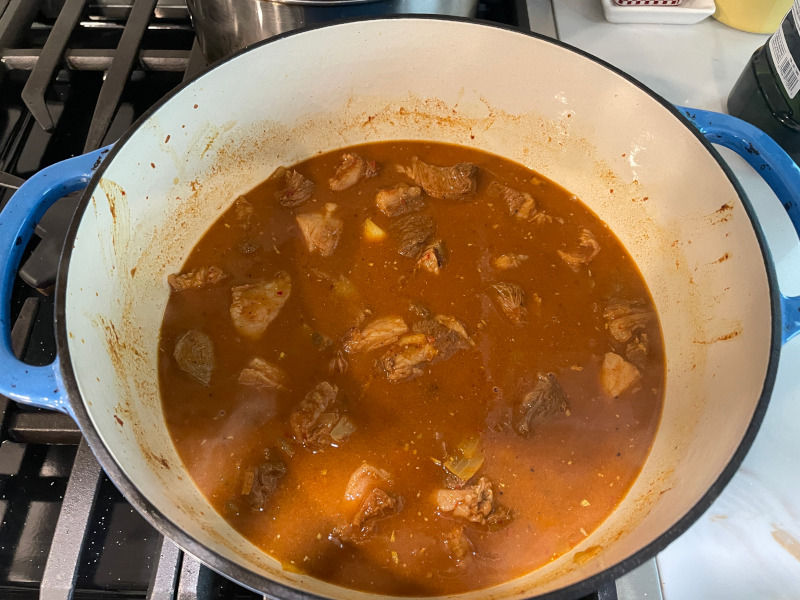
Add the water and bring to a simmer.
As soon as it starts simmering, stir it up, put the lid on, and put it on low on the back burner.
Stir every ½ hour.
At the 1 ½ hour mark, position the lid to allow evaporation, so leave about a ½ inch crack in the top of the pot by shifting the lid.
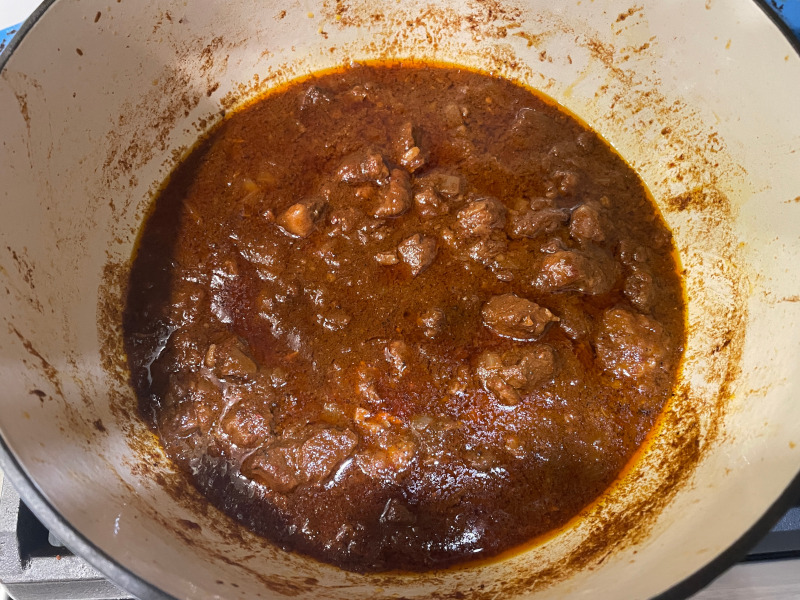
Keep an eye and keep stirring. Raise the heat to a low medium to accelerate reduction. Keep an eye and keep stirring. You don’t want it to burn or stick to the bottom.
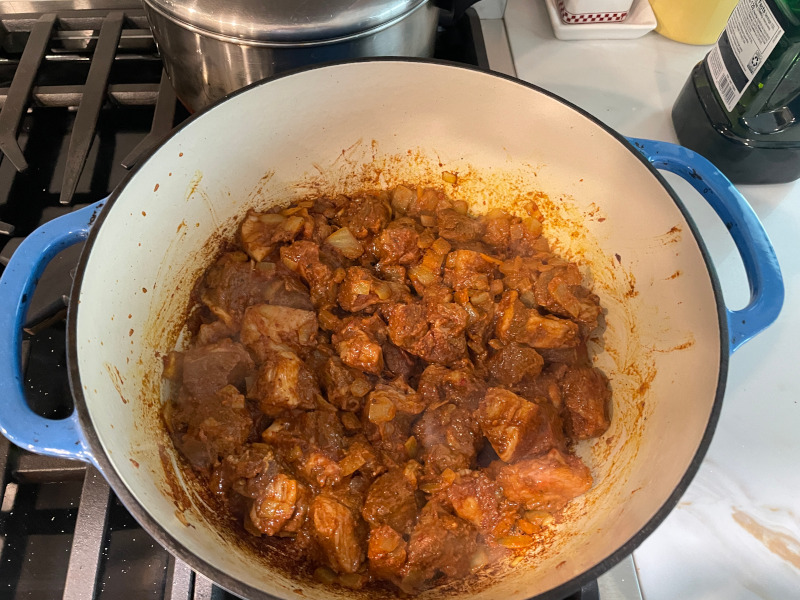
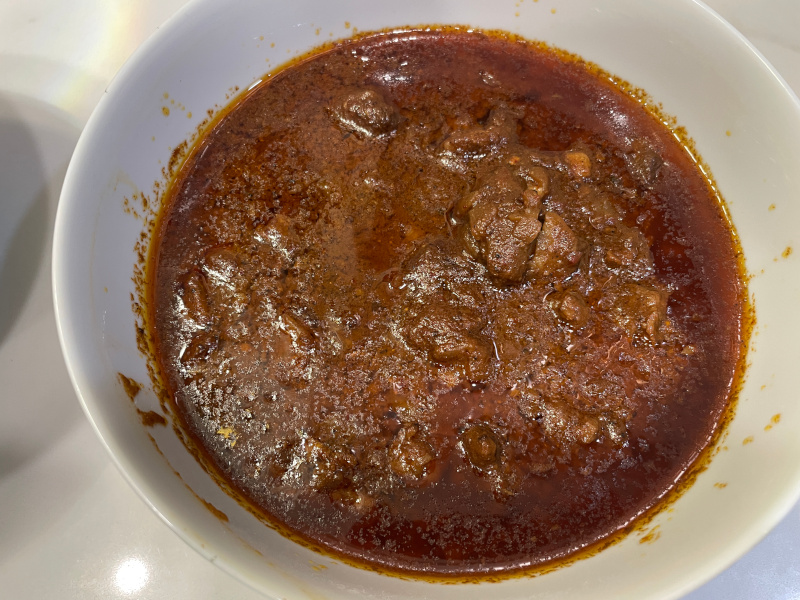
It is done when the lamb is tender and the gravy is thickened and homogenous. You should not see any chunks of onion; it should be lamb in a reddish-brown gravy.
Add the sugar. Add the salt one teaspoon at a time and test for seasoning. Add pepper to taste.
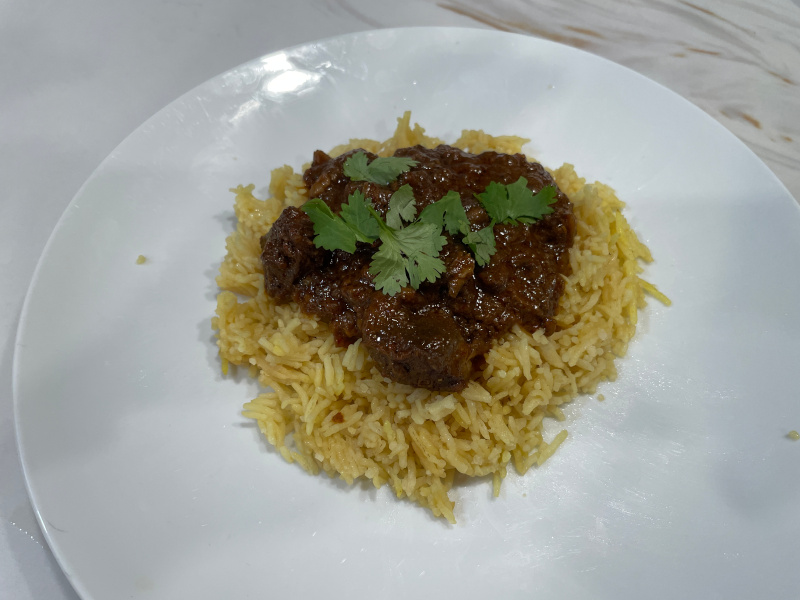
People like it with rice, but I’m a bread guy. Plain naan or any type of baguette. I bet a Portuguese roll would also be fantastic, consider the heritage.
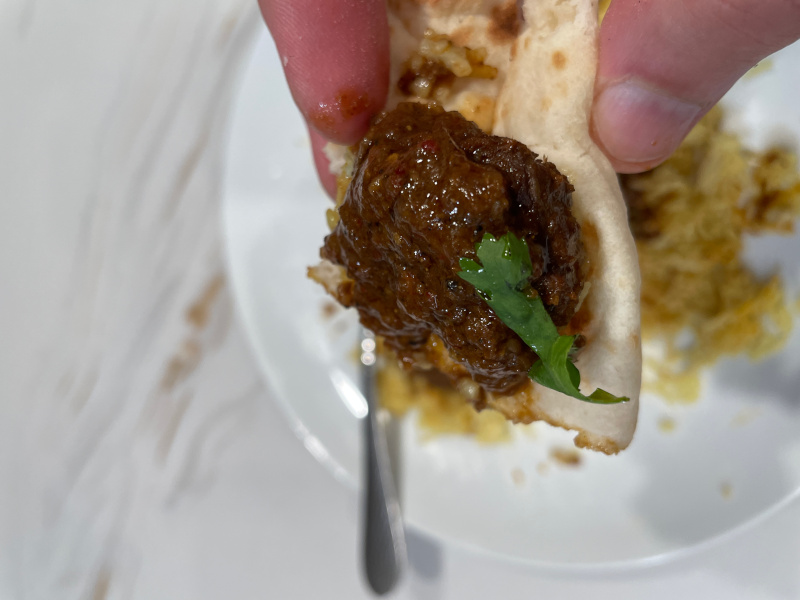
Kiss yourself for making deliciousness
Visit me at my day job – Practical Compliance Solutions
These two YouTube videos were the source of my rendition after looking at history and several recipes.
https://youtu.be/h2CHeCO2JEc?si=MPfLHDOE23bQMnTa
https://youtu.be/ljcRgMHutHE?si=9IJ4wExj69pGX-FI
AND – if Shamza would have had a vindaloo recipe, I probably would have just used hers. She’s great!
https://www.youtube.com/@MyLittleKitchenRecipes
And now for my rant:
A 4 lbs. leg of lamb at Costco was $30, I only used 2 lbs.
Total amount of spices and other ingredients could not have exceeded $4.00
Total cost of ingredients to make 2 lbs. of lamb vindaloo $19.00 which would be 4 generous servings, I bet some restaurants serve a 6 oz portion, but let’s assume an 8 oz portion, the total cost per portion is $4.75 and I don’t have restaurant buying power. Granted I also don’t have restaurant overhead.
The restaurant in Rhode Island probably used shortcuts and charged 10x my cost.
In a typical restaurant, food cost sits between 30% and 35%. For a $4 ingredient cost, a standard menu price would range from $11 to $13.50.
However, a 10% food cost can be standard in a few specific, high-overhead scenarios. Given that, the maximum a restaurant would charge would be about $20 and then you need to pay for Naan and a drink. Now that I’m thinking about, I bet the whole meal was $40 not just vindaloo, but still $40 for a solo person is a lot.
I did not taste this Rhode Island Vindaloo, maybe it was worth it. But it has been my experience that many Indian restaurants are charging high prices for mediocre food.
Based on the information below, I can safely say that Indian food at my house will almost always be better than dining out. But then again, almost everything at my house is better than out.
I googled this question, “I have to believe that most Indian restaurants have a lot of the stuff already frozen and made they can’t have all those dishes ready all the time?”, and the answer gave the clue as to why dining out is not about the food but either convenience or comradery.
Most Indian restaurants do not freeze their finished dishes, but they rely on pre-made base gravies and sauces cooked in large batches ahead of time.
How Indian Restaurant Kitchens Work:
- Base Gravies (Makhani or Korma):
Restaurants use a few master sauces—often tomato-onion or cashew-based—as the foundation for dozens of different menu items.
- Custom Finishing: When you order, a chef scoops out the base sauce, adds fresh meats or vegetables, and tosses in specific spices, cream, or herbs to finish the dish in minutes.
- Refrigeration over Freezing: Ingredients and prep work are usually kept in walk-in coolers and refrigerators rather than deep freezers to maintain better texture and flavor.
- Cloud Kitchen Exceptions: Some modern delivery-only ghost kitchens or low-end operations use fully pre-cooked, vacuum-packed, or frozen meals for rapid assembly, but traditional sit-down restaurants cook components fresh daily.
To handle fundamentally different flavor profiles like Saag, Vindaloo, Korma, and Rogan Josh, restaurants don’t use just one master sauce—they typically rely on three to five distinct base gravies prepared in large batches every morning.
Here is how kitchens categorize and rapidly customize these specific dishes:
The 4 Foundation Bases
- The Onion-Tomato Base (Bhuna/Masala): Finely chopped onions, ginger, garlic, tomatoes, and basic spices cooked down until thick. This serves as the foundation for Rogan Josh, Jalfrezi, and Bhuna dishes.
- The White/Yellow Base (Shahi/Korma): A rich blend of boiled onions, yogurt or cream, cashew paste, and mild aromatics (like cardamom). This is used exclusively for Korma and other mild, creamy dishes.
- The Spinach Base (Saag/Palak): Fresh spinach leaves blanched, pureed, and tempered with cumin, garlic, and green chilies. This is kept separate just for Saag dishes.
- The Vindaloo Paste (Acidic/Spicy): A specialized fiery paste made from dry red chilies soaked in vinegar, garlic, cumin, and warm spices.
How Your Order is Customized in Minutes
When an order ticket comes in, the line cook uses a high-heat wok (karahi) to assemble the final dish using a process called tadka (tempering) and mixing:
That is exactly why Butter Chicken and Chicken Tikka Masala (CTM) taste identical at many subpar restaurants.
Because both dishes rely on a tomato, butter, and cream profile, lazy or cost-cutting kitchens will use the exact same “Makhani” (butter) sauce for both orders. In a high-quality restaurant, however, these are two distinctly different recipes.
Why They Taste the Same at Low-Quality Spots
- The Shared Base: Kitchens make one giant batch of cream-tomato sauce.
- The Lazy Shortcut: When a Tikka Masala ticket comes in, they grab the butter chicken sauce, toss in some tossed tandoori chicken, and maybe drop in a handful of diced raw onions and green peppers right at the end.
- The Result: You end up paying $20+ for the exact same flavor profile, just with different chunks of vegetables.
And this ties right back in to my rant on YouTube a couple of years ago.

This content is blocked because it would connect to YouTube.